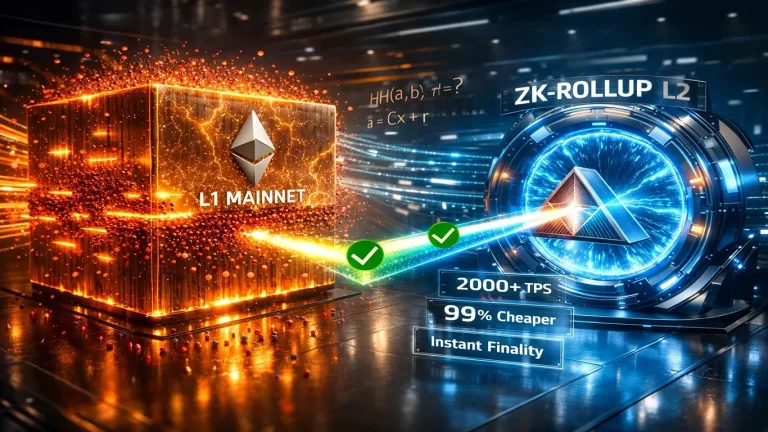

A Web3 developer is a programmer who makes decentralized apps and blockchain systems. If you’re doubting what is a web3 developer closely, picture someone coding for networks spread across many computers instead of one central server. They create the tech behind crypto platforms, DeFi projects, and NFT sites. At Snark Labs, our expert Web3 developers build protected, scalable blockchain solutions that support your businesses win in the decentralized world.
Who Is A Web3 Developer And What Do They Do?
A Web3 developer is primarily different from an outdated software engineer. They own expert awareness in blockchain technology, cryptography, and distributed systems. These experts write smart contracts that execute automatically on blockchains. They make decentralized applications that users interact with. They design protocols that complete networks depend on. They optimize code for performance and security. The role combines technical proficiency with deep understanding of how blockchain systems work.
What makes this career unique is the level of responsibility involved. Old style developers can update code and patch bugs after deployment. Web3 developers work with permanent, immutable code. Once something goes live on a blockchain, it cannot be changed. This reality shapes how they approach every project. Security isn’t just important, it’s absolutely critical. A single vulnerability can cost users millions of dollars.
Essential Skills for Web3 Developers:
Web3 developers essential multiple skill sets to succeed. They must know programming fundamentals in languages like Solidity, Rust, and JavaScript. They need information of cryptography and digital signatures. They must grasp how distributed systems operate and communicate. They should understand blockchain consensus mechanisms. They essential to think about security from day one. They must stay current with emerging technologies and best practices.
Beyond technical skills, good Web3 developers think economically. They understand token mechanics and incentive design. They consider how their code affects whole ecosystems. They make architectural decisions that impact network security and scalability. They collaborate with teams to make sure blockchain development projects succeed. At Snark Labs, our team combines all these abilities to deliver solutions that work in the real world.
Different Types of Web3 Developer Roles:
The Web3 development field includes several specialized roles. Smart contract developers effort on writing and auditing contracts. DApp developers build user interfaces and frontend applications. Blockchain infrastructure developers work on the network layer itself. Security auditors review code for vulnerabilities. Protocol developers research and design new blockchain systems. Some developers expert in specific blockchain networks like Ethereum or Solana. Others work across multiple chains.
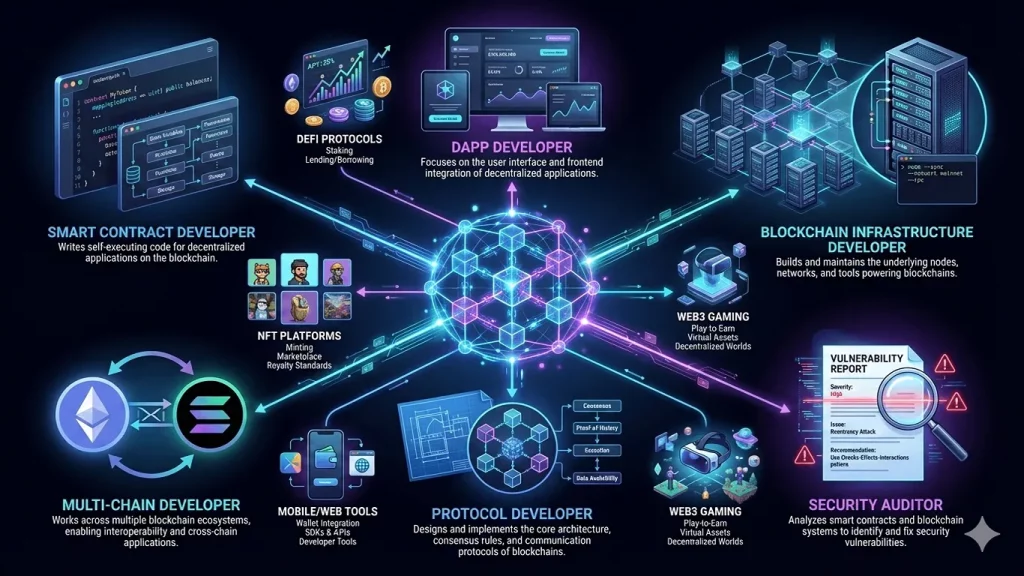
Many developers specialize further within these categories. Some effort on DeFi protocol development. Others work on NFT platforms or gaming applications. Some build mobile app and web development company tools that connect to blockchains. The diversity of specializations reflects how quickly the Web3 space evolves and expands.
Why Companies Need Web3 Developers?
Businesses building blockchain solutions want experienced Web3 developers to grip difficult technical challenges. An excellent web3 development company understands security desires, performance optimization, and best practices. They know how to navigate regulatory landscapes while continuing decentralization. They can design systems that scale without sacrificing security. They know different blockchain ecosystems and can recommend the correct technology stack for each project.
Hiring developers with genuine Web3 expertise prevents costly mistakes. Poor security implementations lead to hacks and stolen funds. Inefficient code creates expensive transaction costs. Poorly designed systems fail to succeed their intended purpose. That’s why partnering with experienced developers matters so much.
Web3 Developer Role Breakdown Table:
| Smart Contract Dev | Write/audit self-executing blockchain code | Solidity, security auditing | Hardhat, Foundry, Remix | DeFi lending protocols, NFT minting |
| DApp Developer | Build user-facing decentralized apps | React, Web3.js, ethers.js | MetaMask, WalletConnect | Uniswap interface, OpenSea frontend |
| Protocol Engineer | Design blockchain network rules & upgrades | Rust, Go, cryptography | Cosmos SDK, Substrate | Layer-2 scaling solutions |
| Security Auditor | Hunt vulnerabilities in smart contracts | Formal verification, fuzzing | Slither, Mythril, Echidna | Code4rena contests, $1M+ bounties |
| Full-Stack Web3 Dev | End-to-end: contracts + frontend + backend | Solidity + Node.js + IPFS | The Graph, Moralis | Complete DEX platforms |
| ZK Specialist | Zero-knowledge proof systems for privacy | Circom, zk-SNARKs, Halo2 | Semaphore, Tornado Cash | Private transactions, identity |
| Cross-Chain Dev | Bridge assets/protocols across blockchains | IBC, Axelar, LayerZero | Wormhole, Chainlink CCIP | Multi-chain wallets, bridges |
The Future of Web3 Development:
The Web3 development field continues growing quickly. More companies are recognizing the potential of blockchain technology. Better tools and frameworks emerge mostly. Developer communities become stronger and more collaborative. The technology matures from experimental to production-ready. This evolution creates tremendous demand for skilled Web3 developers worldwide.
In Summary: What Is a Web3 Developer?
Understanding what is web3 developer is supports you in appreciating the specific expertise required to build decentralized systems. These professionals combine software engineering with cryptography, distributed systems knowledge, and economic thinking. This job needs careful work and continuous learning. It draws top engineers because the problems are real and the results matter a lot. If you’re starting this career or working with a web3 development company like Snark Labs, understanding these skills is key to winning in blockchain.